
- All
- Product Name
- Product Keyword
- Product Model
- Product Summary
- Product Description
- Multi Field Search
Views: 0 Author: Site Editor Publish Time: 2026-08-04 Origin: Site


In early July, our technical team successfully completed the installation and commissioning of a robotic tufting machine at a carpet factory in India.
Our customer planned to produce high-end carpets featuring detailed and complex designs. Meeting this requirement depended not only on machine performance and production capacity, but also on how effectively the customer’s technicians could prepare patterns and operate the design software.
After completing the installation, our engineers provided hands-on machine operation and software training at the customer’s factory. The equipment has since entered production and is meeting the customer’s expectations for quality, performance, and output. Our customer is satisfied with both the machine and the technical support we provided throughout the project.

Project Item | Details |
|---|---|
Project location | India |
Customer type | Carpet manufacturer |
Production objective | High-end, high-quality carpet production |
Main production challenge | Complex carpet patterns and software operation |
Our project scope | Installation, commissioning, operation guidance, and software training |
Current project status | Equipment in production |
Customer feedback | Satisfied with machine performance, capacity, and technical support |
Our customer was not looking for equipment limited to simple or repetitive patterns. Its planned product range included carpets with intricate visual details, curved boundaries, multiple design areas, and complex filling paths.
These products placed higher demands on both the equipment and the production team. The machine needed to follow the prepared tufting path accurately, while the technicians needed to understand how pattern preparation and software settings affected the finished carpet.
Before confirming the solution, we discussed the customer’s carpet designs, expected product quality, and production requirements. This allowed us to understand the complexity of the project and prepare the installation and training around the customer’s actual production goals.

A complex carpet design cannot always be transferred directly to the machine without preparation. The original artwork must first be converted into a suitable tufting path, with individual areas checked and adjusted according to the intended carpet structure.
If the path is not prepared correctly, unnecessary machine movement, inefficient filling sequences, or repeated pattern revisions may occur during sampling and production.
For this reason, we treated software training as a central part of the project rather than a brief introduction after the machine installation.
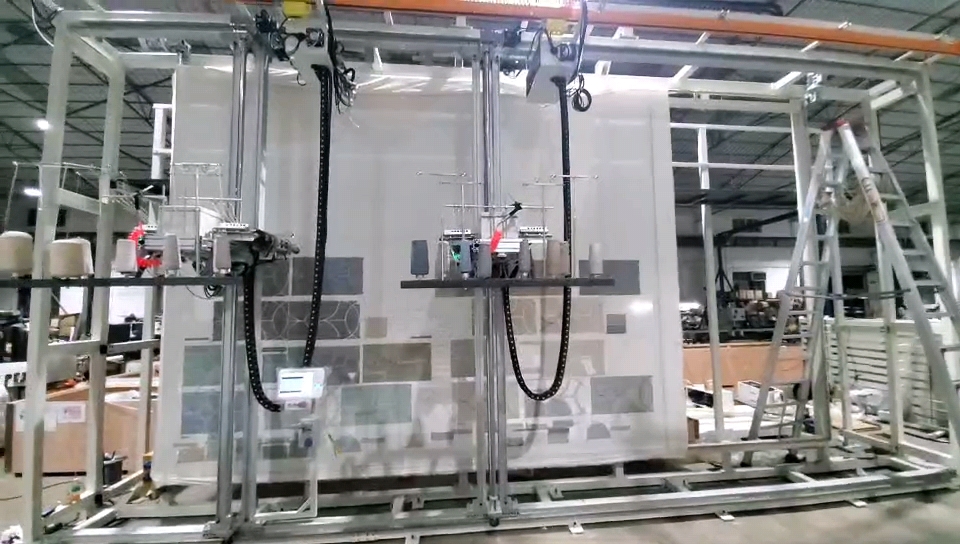
Our robotic tufting machines are developed for carpet manufacturers that require flexible pattern production, consistent tufting quality, and efficient processing of customized designs.
The machines combine precision motion control, closed-loop servo drive technology, adjustable tufting parameters, automated yarn-break detection, and a digital pattern workflow. Depending on the selected configuration, they can support cut pile, loop pile, high-and-low pile, and designs combining different surface effects.
Our self-developed filling-path software supports DST and DSB files, helping operators convert digital carpet designs into machine-readable tufting paths. This combination of equipment and software makes the system suitable for custom rugs, luxury carpets, hotel carpets, decorative carpets, and other products with detailed patterns.
Key capabilities of our robotic tufting machines include:
High-precision robotic movement for detailed carpet patterns
Adjustable stitch spacing and pile height
Cut pile and loop pile production
High-and-low pile surface effects
Automatic yarn-break detection and alarm
Motor-assisted base-cloth tension adjustment
Digital design import and filling-path preparation
Flexible production for customized and small-batch designs
Equipment configurations adapted to different carpet dimensions and factory layouts
Below, you can review our available robotic tufting machine models and select a working size and configuration suited to your carpet designs, production capacity, and factory conditions.
After the equipment arrived at the customer’s factory, our technical team worked with the local technicians to complete the installation.
We checked the equipment setup, confirmed the machine’s operating condition, and prepared the system for trial production. Necessary adjustments were completed before the machine entered normal operation.
We involved the customer’s technicians throughout the installation instead of handing over the machine only after the work was complete. This gave them an opportunity to understand the equipment structure, installation process, and essential checks required before production.
Once the installation was complete, we commissioned the machine under actual factory conditions.
During this stage, we confirmed that the machine could operate normally and meet the customer’s requirements for performance and production capacity. We also carried out trial operations and explained how the machine, control system, design software, and prepared pattern files work together during carpet production.
The customer’s technicians were able to observe the complete workflow and ask questions based on their own production environment. This made the training more practical and helped them become familiar with the equipment before taking responsibility for daily operation.
Following installation and commissioning, our engineers provided on-site operation training for the customer’s technicians.
We introduced the normal operating workflow and explained the main points that require attention before, during, and after production. Rather than relying only on manuals or written instructions, we demonstrated the operating process directly on the installed machine.
The training helped the customer’s technicians understand:
Pre-production equipment checks
The normal start-up and operating sequence
Loading and checking prepared pattern files
Monitoring the machine during tufting
Identifying conditions that require adjustment
Completing routine shutdown and cleaning procedures
Communicating technical issues for follow-up support
Our installation, operation training, and after-sales support are intended to help customers move from equipment delivery to practical production with fewer start-up difficulties.
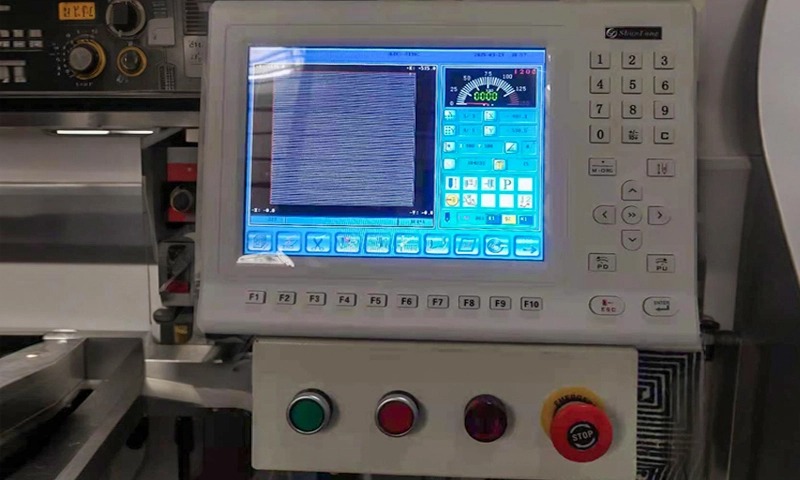
Because the customer’s carpet designs were particularly complex, we spent considerable time on software training.
Our objective was not simply to show the technicians where individual software functions were located. We wanted them to understand the complete workflow from an original carpet design to a production-ready tufting file.
The training covered:
Preparing and checking designs before path generation
Importing compatible design files
Understanding filling-path planning
Dividing complex patterns into manageable production areas
Checking pattern boundaries and filling sections
Reviewing the generated path before production
Matching the design file with machine operating settings
Identifying output problems and revising the design
Practising with designs similar to the customer’s actual products
Our robotic tufting machine software connects digital carpet designs with the machine’s movement and tufting process. For complex carpets, this connection directly affects sampling efficiency, pattern accuracy, and the ease of preparing future orders.
Using designs related to the customer’s actual products made the training more effective. The technicians could see how different filling paths influenced machine movement and why certain areas of a pattern required additional checking or adjustment.
By the end of the training, the customer’s technical team had gained a clearer understanding of both machine operation and software-based pattern preparation.
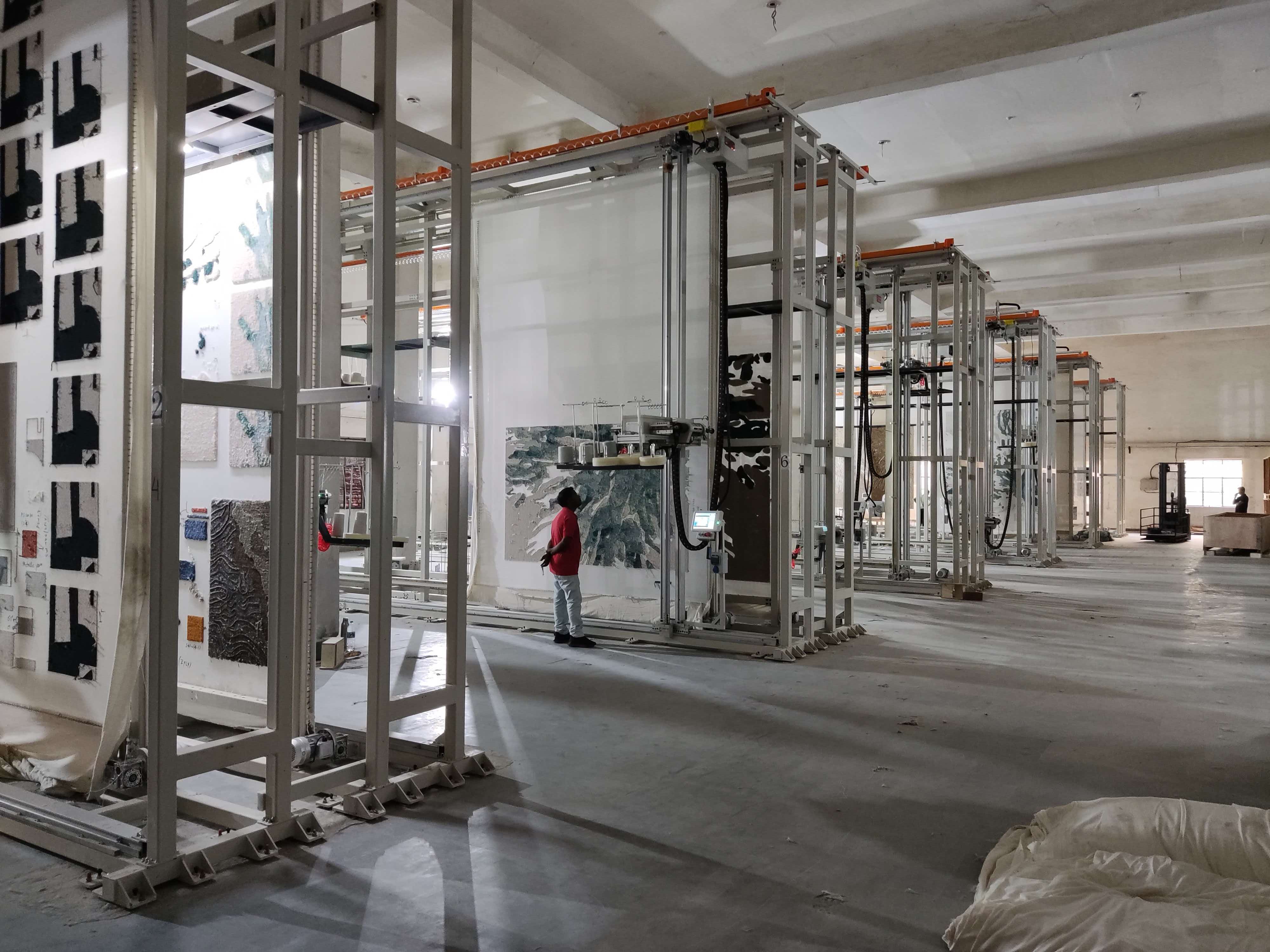
After we completed the installation, commissioning, and technical training, the robotic tufting machine entered production at the customer’s factory.
The customer’s technicians were able to apply the operating and software procedures introduced during the on-site sessions. The machine delivered the performance and production capacity required for the factory’s high-end carpet plans.
The project achieved the following results:
We completed the robotic tufting machine installation successfully.
We commissioned and tested the equipment at the customer’s factory.
The machine met the customer’s performance and production capacity requirements.
We provided practical operation training for the local technical team.
We completed extensive software training for complex carpet designs.
The customer’s technicians gained experience with the complete design-to-production workflow.
The equipment entered production after commissioning and training.
Our customer expressed satisfaction with the machine and our technical support.
This project confirmed that a successful robotic tufting installation involves more than the mechanical equipment.
For manufacturers producing simple and repetitive carpet patterns, technicians may become familiar with the design workflow relatively quickly. Complex carpets, however, place greater demands on pattern preparation, filling-path planning, and production judgement.
Without sufficient software knowledge, a factory may have suitable equipment but still spend unnecessary time revising designs, testing patterns, or correcting inefficient tufting paths.
By dedicating more time to software training, we helped the customer’s technicians develop the practical skills required for their intended products. The local team is now better prepared to handle future carpet designs and make routine adjustments independently.
Before starting a new robotic tufting project, we work with the customer to clarify:
The types of carpets to be produced
The complexity of the planned carpet designs
The carpet dimensions and surface effects required
The design file formats currently used
The expected production capacity
The available factory space and proposed equipment layout
The experience level of operators and technicians
The training required for machine operation and design software
The patterns that should be prepared for trial production
The technical support required after installation
Understanding these details allows us to prepare a more suitable equipment configuration and a more practical training program.
We provide robotic tufting machines together with installation guidance, commissioning support, operation training, software instruction, and after-sales technical assistance.
Whether you plan to produce custom rugs, high-end carpets, hotel carpets, or products with complex patterns, we can evaluate your designs and recommend a machine configuration suited to your production requirements.
Contact our team to discuss your carpet designs, required working size, expected capacity, factory conditions, and technician training needs.
The customer planned to produce carpets with complex designs. Its technicians therefore needed to understand design preparation, filling-path planning, file checking, and how the software output affected machine operation and the finished carpet.
Yes. Our robotic tufting machines can support detailed and customized carpet patterns when the design file, tufting path, machine settings, materials, and operating process are properly coordinated. Complex designs also require technicians who understand the software workflow.
We provided on-site machine installation, commissioning, trial operation, machine operation guidance, technical training, and extensive software instruction for the customer’s complex carpet designs.
Yes. After commissioning, the machine met the customer’s requirements for equipment performance, production capacity, and carpet quality.
Yes. The customer put the machine into production after we completed the installation, commissioning, and technician training.
Yes. We can incorporate designs similar to the customer’s actual products into the training. This is particularly helpful for factories producing complex patterns, customized carpets, or products with multiple filling areas.
From Design to Production
Tell us about your carpet size, pattern complexity, pile style, and target capacity. Our team will help you evaluate the right machine configuration, software workflow, installation plan, and technician training for your project.
Get a project-specific recommendation from our technical team.


