
- All
- Product Name
- Product Keyword
- Product Model
- Product Summary
- Product Description
- Multi Field Search


What does it really mean to program a robot? It is not just about writing code. It is about telling a machine how to complete a real task with accuracy, speed, and consistency.
This topic matters even more in modern manufacturing. From simple motion control to a robotic tufting machine, robot programming connects software, hardware, and production goals. It turns design ideas into repeatable actions on the factory floor.
In this article, you will learn how robot programming works in practical terms. We will look at useful tools, common programming choices, and real production logic. You will also see how advanced solutions like MIXC help make robotic automation smarter, faster, and more precise.
A robot follows instructions step by step, without guessing or adapting on its own. We give it a sequence, and it repeats the same process every time. This makes programming powerful, because once we get it right, the result stays consistent. The program receives input, processes it, and sends commands to the machine.
To understand it better, think about this simple flow:
● Input: sensor data, position, or design file
● Process: logic, calculation, or decision-making
● Output: movement, action, or signal
Each part must connect smoothly. If one step fails, the whole process breaks. That is why we must keep instructions clear and structured.
Software alone does nothing until it connects to hardware. A robot controller translates digital instructions into physical actions such as moving motors, adjusting tools, or reacting to signals.
In a robotic tufting machine, this connection becomes very clear. The program controls how the machine moves across fabric, where the needle inserts yarn, and how patterns are formed. Even small errors in code can affect the final design. That is why strong coordination between software and mechanical systems is essential.
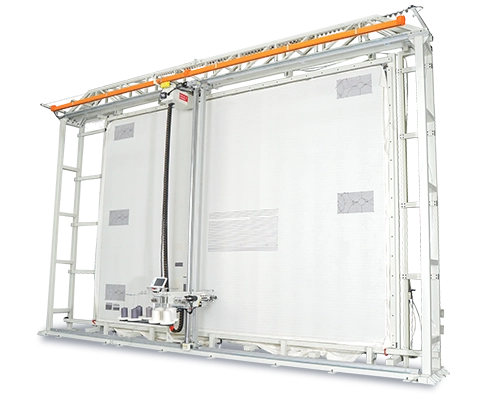
Every successful robot program starts with a clear goal. What should the robot do? Move along a path, assemble parts, or create a textile pattern?
Take a robotic tufting machine as an example. The goal may be to produce a detailed carpet design. Before coding, we define the pattern, dimensions, stitch style, and production speed. Without this clarity, the program will lack direction and efficiency.
After defining the goal, we break it into smaller steps. This process creates a clear algorithm. Each step should be simple and easy to test.
Here is a basic structure:
● Move to position
● Insert yarn
● Shift direction
● Repeat pattern
This breakdown helps us understand the task and reduce errors. It also makes debugging easier when something goes wrong.
Selecting the right control method is a key step in robot programming. Different robots use different tools based on their task, required precision, and level of automation. Simple systems focus on basic control, while advanced machines need more powerful and integrated solutions.
Below is a comparison of common control methods and tools used in robot programming:
Control Type | Typical Tools | Use Case | Key Advantage |
Basic Control Systems | Microcontrollers (e.g., Arduino) | Simple robots, learning projects | Easy setup and direct control |
Mid-Level Systems | Embedded computers (e.g., Raspberry Pi) | Moderate automation, flexible tasks | Better processing and connectivity |
Industrial Control Systems | Motion controllers, servo systems, dedicated software | Robotic tufting machine, industrial automation | High precision and stable performance |
For industrial equipment like a robotic tufting machine, programming often relies on specialized software interfaces combined with motion controllers and servo systems. These tools work together to ensure precise movement, accurate timing, and consistent output quality across production cycles.
Robot programming is never perfect on the first attempt. Testing is essential. Start with small actions, verify results, and adjust as needed.
This iterative process improves accuracy and reliability. Over time, the program becomes stable and efficient, ready for full-scale operation.
Tip: Always test one function at a time before running a full program. This reduces errors and saves production time.
Python is one of the most popular languages in robotics. It is easy to learn and highly flexible. Many developers use it for automation, data processing, and intelligent control systems.
Its simple syntax allows beginners to start quickly. At the same time, it supports advanced features such as machine learning and computer vision. This makes Python a strong choice for both learning and practical applications.
When performance matters, C and C++ are often the preferred languages. They offer faster execution and better control over hardware.
Industrial robots frequently use these languages because they require precise timing and real-time responses. For systems like a robotic tufting machine, where accuracy and speed are critical, C++ provides reliable performance.
ROS provides a framework for building robot systems. It helps connect different components such as sensors and controllers. Developers use it to manage communication and data flow.
Tool | Main Use | Advantage |
Python | High-level control | Easy to learn |
C/C++ | Low-level control | Fast and precise |
ROS | System integration | Scalable and modular |
Together, these tools create a flexible and efficient development environment. They allow programmers to build, test, and scale robot systems more smoothly across different applications.
Arduino is a great starting point for beginners. It is simple, affordable, and widely supported. It allows direct control of sensors and motors.
For basic projects, Arduino provides everything needed to understand robot behavior. It helps users learn how inputs and outputs interact in real time.
Raspberry Pi acts like a small computer. It runs an operating system and supports more complex applications.
It is ideal for projects that require image processing, networking, or advanced logic. Many robotics systems use Raspberry Pi alongside other controllers for added flexibility.
Industrial robots demand higher precision and stability. They use advanced controllers, servo motors, and specialized software.
A robotic tufting machine operates with high-speed stitching and accurate positioning. Systems like those from MIXC combine intelligent software interfaces with precise motion control. This allows consistent production and detailed pattern execution.
Note: Industrial controllers often include built-in safety and monitoring features, which are essential for continuous operation.
The first step is converting a design into a format the machine can understand. This involves transforming images or patterns into motion paths and stitch data.
Modern systems support specific file formats and design tools. These tools simplify the process and ensure compatibility with the robotic tufting machine.
Programming includes setting various parameters. These control how the machine operates and how the final product looks.
● Stitch spacing affects density
● Speed controls production rate
● Pile type defines texture
Each setting must align with the design goal. Small adjustments can create very different results.
High-quality results require precise coordination. Movement, yarn tension, and stitching must work together.
Advanced machines use servo systems and intelligent controls to maintain stability. MIXC solutions, for example, achieve high accuracy through coordinated motion and automatic tension adjustment. This ensures smooth operation and consistent output.
Automation features improve efficiency and reduce manual work. These include detection systems and automatic responses.
Feature | Function | Benefit |
Yarn detection | Detect breaks | Reduce downtime |
Auto return | Return to position | Save time |
Smart control | Adjust settings | Improve consistency |
These features allow the system to respond quickly without constant supervision. They also help maintain stable production quality across long operating cycles.
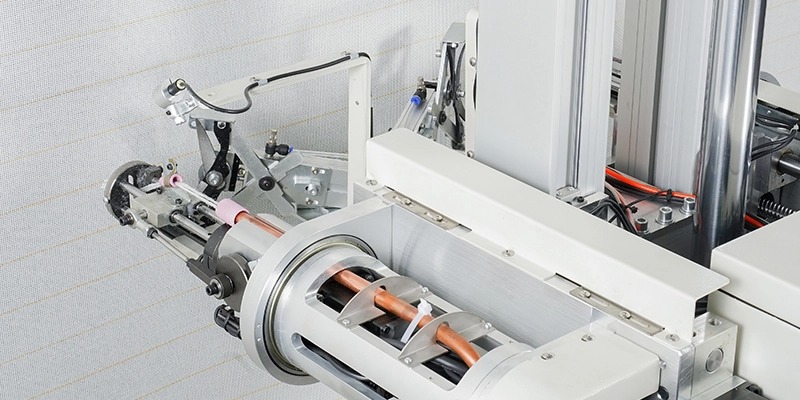
Testing begins with simple actions and controlled conditions. Check if the robot moves correctly, stops at the right position, and follows instructions accurately every time. It is also useful to observe speed consistency and response timing during these early tests. Small variations can reveal hidden issues.
This step ensures that the foundation is solid before moving forward. Fixing small issues early prevents larger problems later. It also helps reduce debugging time and improves overall system reliability in long-term use.
Before full production, run sample tasks under real working conditions. This helps verify the complete process from start to finish, including movement, timing, and output quality.
For a robotic tufting machine, sample runs show how patterns appear in real materials. You can observe stitching accuracy, yarn consistency, and overall design quality. Adjustments can then be made to improve efficiency, reduce waste, and ensure stable production results.
Improving robot programming skills requires more than learning syntax. It involves thinking clearly about tasks, building efficient logic, and using each machine’s strengths. The following table summarizes key approaches and how they support better results in real applications.
Approach | What It Means | Why It Matters |
Think in tasks, not just code | Focus on what the robot must achieve, then design logic around the goal | Simplifies problem-solving and improves programming efficiency |
Build reusable motion and control logic | Create modules for repeated actions such as movement or sensing | Saves time, reduces errors, and makes systems easier to scale |
Match the program to the machine’s strengths | Align code with the robot’s capabilities like speed and precision | Maximizes performance and ensures consistent output quality |
By applying these methods, programmers can move from basic coding to more structured and efficient robot control. For example, a robotic tufting machine performs best when its precision and speed are fully supported by well-designed programming logic.
Programming a robot goes beyond writing simple code. It means turning a real task into clear and structured instructions a machine can follow. We define goals first, then build logical steps, execute actions, and improve results through testing. This process works for both simple robots and advanced systems like a robotic tufting machine, where precision and consistency matter.
As automation grows, these skills become more valuable in modern production. Solutions from MIXC Textile Technology Co., Ltd. show how intelligent control and high-speed performance can improve efficiency and output quality. Their robotic tufting machine systems combine accuracy, automation, and flexible design control, helping users achieve reliable and scalable manufacturing results.
A: Programming a robot means turning a task into clear instructions it can follow. We define the goal, build the logic, run the program, and test the result until it works well.
A: You program a robotic tufting machine by converting a design into motion paths, stitch logic, and machine settings. Then you adjust speed, spacing, and pile style so it can produce the pattern accurately.
A: Logic keeps the robot consistent. It helps the machine follow the right sequence, avoid errors, and repeat the same task with stable results in real production.
A: It depends on the system. A robotic tufting machine may use Python for flexible control, C or C++ for speed, and specialized industrial software for motion and pattern management.
A: The cost depends on the machine, software, design complexity, and automation level. A robotic tufting machine using advanced control features may cost more upfront, but it can improve efficiency and output quality.
A: A robotic tufting machine offers precise positioning, stable stitching, faster production, and better pattern consistency. It also supports automation features that reduce manual work.


