
- All
- Product Name
- Product Keyword
- Product Model
- Product Summary
- Product Description
- Multi Field Search
Views: 0 Author: Site Editor Publish Time: 2026-04-10 Origin: Site


Why do many beginners struggle with robotics programming in real factories? They often start coding too early and miss how machines actually work. Industrial robotics is not just about writing code. It is about solving real production problems and improving efficiency. To move faster, we need to learn through real applications. Instead of focusing on theory, we should observe how robots perform tasks like pattern execution or material handling. A robotic tufting machine is a great example. It shows how software, motion control, and mechanical systems work together to create consistent results.
In this article, you will learn how to start robotics programming step by step. We will explore practical methods, real workflows, and useful tools. You will also see how systems like robotic tufting machines help turn programming into real industrial output.
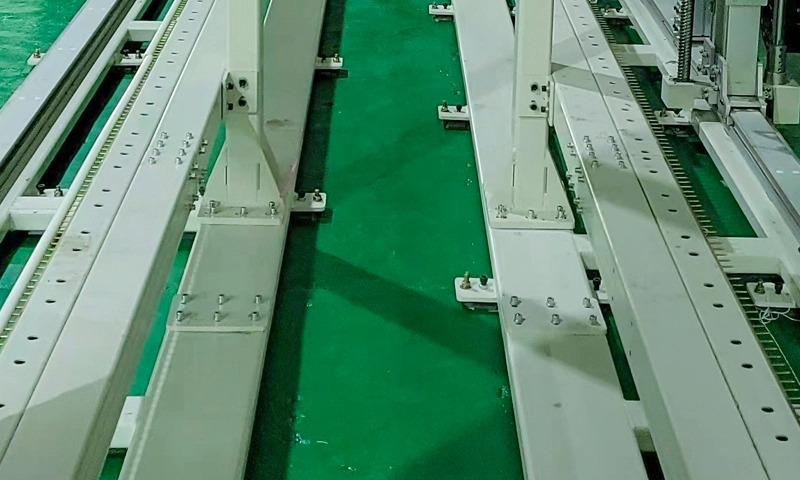
Before writing any code, you need to clearly define what the robot is expected to do. In industrial settings, robots are not programmed for experimentation—they are programmed to deliver measurable results. Tasks could include stitching patterns, transporting materials, or coordinating multiple machines in a production line.
For example, in a robotic tufting machine, the goal is not just movement. It must follow precise paths, control stitch density, and maintain consistent fabric tension. Each of these requirements directly influences how the program is structured. When you define clear goals, your programming becomes more focused. You avoid unnecessary complexity and build solutions that align with production efficiency, quality standards, and repeatability.
Not all robots are the same. General industrial robots are flexible and can be programmed for many tasks. Collaborative robots (cobots) are designed to work safely alongside humans. Then there are application-specific systems like robotic tufting machines, which are optimized for a single process.
Understanding this difference helps you choose the right approach. If you are working with a robotic tufting machine, much of the complexity lies in pattern execution and motion precision rather than general-purpose manipulation.
By focusing on the type of system you are working with, you can avoid learning unnecessary tools and instead concentrate on what truly matters for your application.
We do not need to learn everything at once. Instead, we focus on a few key concepts that directly affect robot behavior. These include coordinate systems, motion paths, and input-output signals.
In a robotic tufting machine, coordinate systems define how the machine moves across fabric. Motion paths determine how patterns are formed. Input signals may trigger actions like starting or stopping stitching.
The following table shows how these concepts connect to real tasks:
Concept | Role in Programming | Example in Tufting |
Coordinates | Define position | Needle placement |
Motion path | Control movement | Pattern shape |
I/O signals | Trigger actions | Start/stop stitching |
When we understand these basics, programming becomes more intuitive.
Industrial robotics is about processes, not isolated commands. A robot rarely performs a single action. Instead, it follows a sequence—start, execute, adjust, and finish.
In a tufting workflow, the system loads a pattern, aligns the material, executes stitching, detects issues, and returns to a safe position. Each step must be coordinated through programming.
When you think in workflows, you start designing systems instead of writing code line by line. This mindset helps you build scalable and efficient automation solutions.
Teach pendant programming is one of the most common ways beginners learn robotics. It allows you to manually guide the robot and record positions step by step. This hands-on method helps you understand how the robot moves and reacts.
For a robotic tufting machine, this approach can be used to define basic motion paths or test small pattern sections. It provides immediate feedback, which is valuable when learning how movements translate into output. Although it may be slower for large-scale production, it is an excellent starting point. It builds confidence and gives you a clear understanding of motion control.
As production requirements grow, offline programming becomes more important. This method uses simulation software to create and test programs without stopping the actual machine. For industries using robotic tufting machines, this means patterns and workflows can be designed and optimized before deployment. It reduces downtime and allows for faster adjustments. Offline programming also supports scalability. Once a program is tested, it can be reused or modified for different designs or production runs, saving both time and resources.
Tip: Use offline simulation early, even for simple tasks—it helps you avoid costly errors during real production.
To program effectively, you must understand the machine itself. A robotic tufting machine includes multiple components such as motion axes, servo motors, and fabric tension systems.
These components work together to ensure stable and precise operation. For example, high-precision positioning systems allow the machine to maintain consistent stitch placement across large surfaces.
MIXC robotic tufting machines highlight how advanced mechanical design and control systems can simplify programming. When the hardware is stable and accurate, your programs become easier to manage and more reliable.
Design software plays a key role in tufting applications. Patterns are created digitally, but they must be converted into motion paths. This conversion defines how the robot moves and stitches.
● We can think of it as a translation process:Design file becomes coordinate data
● Coordinates become motion instructions
● Instructions drive physical movement
Understanding this chain helps us see programming as part of a larger system. It connects creativity and production in a meaningful way.
Beginners often try to handle complex tasks too early. A better approach is to start with simple programs. These include basic routines such as initialization, execution, and reset.
For example, you might begin by programming a robotic tufting machine to execute a simple straight-line pattern. Once that works reliably, you can introduce more complex shapes and variations. This step-by-step approach builds confidence and reduces errors. It also helps you understand how each part of the program affects the final result.
In industrial robotics, performance is not judged by a single successful run. It depends on how consistently a robot can repeat the same task over time. Even small variations can lead to visible defects in production. This is especially true in applications like a robotic tufting machine, where precision directly affects pattern quality. To achieve stable results, several key factors must be carefully controlled during programming.
Factor | What It Means | Why It Matters | Example in Robotic Tufting Machine |
Precision | Accuracy of positioning and movement | Ensures clean and uniform output | Needle follows exact path for consistent patterns |
Repeatability | Ability to perform the same task repeatedly | Maintains product consistency across batches | Each carpet pattern looks identical |
Program Stability | Reliability of the code and logic | Prevents unexpected errors or variations | Smooth execution without interruptions |
Speed Control | Managing movement speed during tasks | Balances efficiency and accuracy | Avoids distortion in stitching at high speed |
Acceleration | Rate of speed change during motion | Reduces vibration and improves control | Smooth transitions between pattern sections |
Synchronization | Coordination between components | Ensures all parts work together correctly | Motion system aligns with stitching operations |
Note: Always test repeatability, not just functionality. A program that works once must deliver the same result every time in production.
Modular programming means breaking your code into smaller, reusable sections. Each module handles a specific task, such as movement, error handling, or pattern execution.
This approach makes your programs easier to update and debug. In a robotic tufting machine, you can reuse modules for different patterns without rewriting the entire program.
It also supports scalability. As your system grows, you can add new modules without disrupting existing ones.
Good documentation is essential in industrial programming. It helps others understand your work and makes future updates easier. Use clear naming conventions, comments, and version control systems. These practices ensure that your programs remain organized and accessible.
In team environments, this becomes even more important. It allows multiple people to collaborate without confusion.
Standardization ensures consistency across different systems and projects. This includes using the same structure for programs, I/O definitions, and workflows. When working with robotic tufting machines, standardization allows you to replicate successful setups across multiple machines or production lines.
It reduces errors and speeds up deployment, making your operations more efficient.
Safety should not be an afterthought. It must be part of your program from the beginning. This includes defining safe zones, setting speed limits, and handling emergency stops. By integrating safety into your workflow, you create systems that are both efficient and reliable. It also ensures compliance with industrial standards.
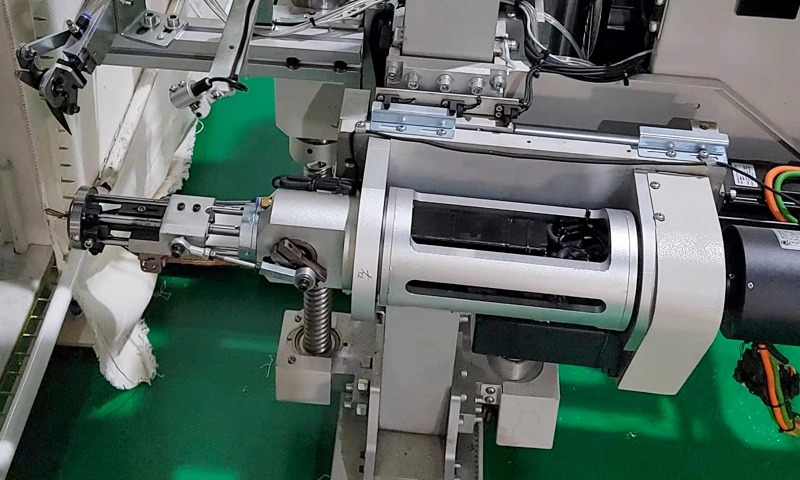
Before scaling up, test your programs in controlled environments. Start with small, repeatable tasks to verify performance.
For example, you can use a robotic tufting machine to produce sample patterns. This allows you to identify issues and make adjustments before full production.
This approach reduces risk and builds confidence in your system.
Once the system runs, we need to evaluate its performance carefully. We should focus on output quality, operating speed, and how easy it is to use. These factors directly affect real production results and long-term efficiency.
MIXC systems demonstrate how intelligent interfaces can simplify operation. They allow operators to adjust parameters quickly while keeping high production standards.
Metric | What to Check | Impact |
Quality | Pattern accuracy | Product consistency |
Speed | Cycle time | Productivity |
Usability | Interface control | Operator efficiency |
By reviewing these metrics together, we gain a clearer view of overall system performance. This helps identify areas for improvement and supports more stable, efficient production.
Starting robotics programming for industrial applications needs a clear and structured path. We should focus on real tasks, workflows, and production goals, not just code. When we connect programming to actual operations, learning becomes faster and more practical.
A robotic tufting machine shows how robotics works in real industry. It combines precision, automation, and intelligent control to deliver stable results. Systems like those from MIXC Textile Technology Co., Ltd. highlight how advanced design and smart interfaces improve efficiency, accuracy, and ease of use in production environments. By building strong fundamentals and choosing the right methods, we can move from beginner to real application more quickly. Continuous testing and improvement help refine workflows. Over time, this approach leads to reliable performance and long-term success in industrial robotics.
A: Start by defining a real production task first. Then learn core concepts like motion paths, coordinates, and I/O signals. It is easier to improve when programming connects to an actual workflow.
A: A robotic tufting machine gives a clear view of how software, motion control, and mechanical systems work together. It helps beginners understand how programming affects precision, repeatability, and production quality.
A: Robots do not only perform single commands. They follow full sequences such as start, execute, adjust, and stop. This makes workflow thinking essential for stable and efficient production.
A: Start with simple routines like initialization, movement, and reset. After that, use offline simulation and modular programming to improve accuracy, reduce downtime, and support easier updates.
A: It can be a better learning example for application-based training. A robotic tufting machine shows a complete process clearly, while a general robot may require broader setup knowledge.
A: Price often depends on motion accuracy, automation level, control software, speed, and support services. Machines offering stable performance and intelligent control usually provide stronger long-term value.


