
- All
- Product Name
- Product Keyword
- Product Model
- Product Summary
- Product Description
- Multi Field Search
Views: 0 Author: Site Editor Publish Time: 2026-07-25 Origin: Site


High-resolution carpet designs require exact control over yarn placement to look professional. Maximizing pattern detail often introduces hidden production costs. Producing sharp, intricate textiles means walking a fine line between aesthetic perfection and material waste.
Stitch size acts as the pixel resolution of any rug. Tighter stitches yield sharper lines and smoother color gradients across the canvas. Conversely, looser stitches optimize for speed and keep material consumption remarkably low.
Commercial operators and high-end fabricators must evaluate how different equipment manages stitch consistency. Balancing product quality with production return on investment dictates long-term success. We will explore how mastering this metric transforms your manufacturing pipeline.
Resolution vs. Efficiency: Smaller tufting stitch size increases pattern detail but exponentially increases yarn consumption and production time.
Equipment Limits: Handheld tufting machines rely on operator skill for consistency, whereas robotic and computer-controlled systems use algorithmic pacing to guarantee exact stitch distances.
Material Risks: Over-tufting to achieve detail without adjusting machine speed or cloth tension often leads to torn primary backing and uneven pile heights.
Scalability: Upgrading to automated tufting systems is justified when pattern complexity and high-fidelity reproduction become the primary bottlenecks in your production cycle.
You must understand two primary metrics to control carpet detail. The first is stitch distance. This measures the physical gap between individual yarn loops or cuts along a single line. The second metric is row spacing. This determines how closely parallel lines of yarn sit next to one another. Both variables define your ultimate tufting stitch size and determine the structural integrity of your rug.
Think of stitch density as digital image resolution. A digital screen relies on thousands of tiny pixels to display a crisp image. Carpet design relies on thousands of individual yarn tufts to build visual clarity. High stitch density creates a "high-definition" surface. You need this tight grouping for specific design elements. Typography requires densely packed yarn to keep letters legible. Sharp geometric borders rely on close stitches to maintain crisp edges. Subtle color gradients blend more smoothly when you pack transitional colored yarns closely together.
However, physical realities limit how densely you can pack yarn. You cannot infinitely decrease the gap between stitches. Several strict constraints dictate maximum allowable density:
Yarn Gauge Limits: Thick wool blends consume more physical space per tuft. You cannot force heavy-gauge yarn into micro-stitch configurations without causing severe bunching.
Pile Height Interactions: Taller pile heights naturally fan out at the top. They cover more surface area. You can often use slightly looser row spacing with tall piles without exposing the primary backing.
Backing Cloth Capacity: Primary backing cloth consists of woven threads forming a grid. Every needle insertion pushes these threads apart.
Exceeding the cloth's structural capacity invites disaster. Punching too many holes into a small area severs the structural warp and weft fibers. The cloth begins to warp under tension. Eventually, the fabric tears completely. You lose the entire piece and waste hours of labor.
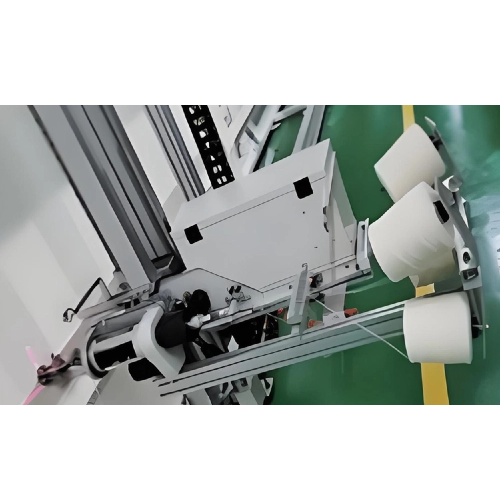
Different classes of equipment manage yarn placement in fundamentally different ways. Your choice of hardware dictates your ceiling for detail and consistency.
Handheld tools remain the standard for entry-level hobbyists and small batch creators. These devices rely entirely on manual pressure. The operator controls the forward-feed speed across the cloth. You must match the physical movement of your arm to the mechanical cycling of the needle. Pushing the gun too fast creates sparse, loose lines. Moving too slowly creates hard, dense lumps of yarn.
This manual approach carries significant limitations. Human error is unavoidable. Inconsistent line weights plague intricate designs. Operator fatigue sets in quickly during long production runs. A worker's pacing at the start of a shift rarely matches their pacing hours later. This leads to wildly uneven density across a single large carpet.
Upgrading to a computer tufting machine changes this dynamic entirely. These systems use CNC-style programming. They translate digital design files into exact, mathematically calculated motor movements. The software dictates both the needle cycle speed and the movement along the X and Y axes.
The primary advantage here is guaranteed repeatability. A programmed design yields exact stitch density across thousands of runs. Commercial fabricators rely on this batch consistency. You can confidently promise clients that rug number one hundred will perfectly match rug number one.
Large-scale production introduces the robotic tufting machine. These advanced setups utilize articulated arms or rigid gantry systems. They hold the tool head mechanically. The defining feature is absolute geometric control. The machine maintains a perfect 90-degree needle insertion angle at all times.
This mechanical rigidity eliminates cloth deflection. Handheld operators often push the cloth inward, altering backing tension dynamically. Robots keep tension stable. You can execute micro-adjustments in spacing without risking cloth damage. The system precisely targets the spaces between woven backing threads.
High detail is not free. You must weigh aesthetic precision against production constraints. Profitability depends on optimizing this balance for your specific market.
Pushing for high density drives up material costs immediately. A dense rug uses drastically more yarn per square foot. This shrinks your profit margin if you fail to price the product accordingly. Heavy yarn usage also alters your finishing process. Densely packed tufts block standard adhesives from penetrating the roots. You must source specific, lower-viscosity backing glues. These specialized adhesives flow between tightly grouped bundles to secure them properly.
Conversely, prioritizing high output requires larger stitch gaps. You save money on yarn. You finish rugs faster. However, you invite quality degradation. The most common issue is "grinning." This occurs when the primary backing cloth remains visible between sparse rows of yarn. Large gaps also create jagged, pixelated edges on curved design elements.
Durability suffers under high-output settings. Lower pile density creates a weaker structural surface. The yarn lies flat under foot traffic rather than supporting itself. High-traffic rugs demand dense packing to ensure a long lifespan.
Production Approach | Primary Benefit | Material Impact | Quality Risks |
|---|---|---|---|
High Density (Tight Gaps) | Maximum pattern clarity and smooth edges. | Exponential increase in yarn and specific glue needs. | Cloth tearing and excessive stiffness. |
Standard Density (Balanced) | Stable ROI with acceptable visual detail. | Predictable yarn usage per square foot. | Minor loss of micro-detail in complex fonts. |
High Output (Loose Gaps) | Rapid completion and lowest material cost. | Minimal yarn consumption. | Visible backing cloth and poor traffic wear. |
Calibrating your equipment demands practice and careful observation. You must master tension and pacing settings. Standard handheld devices typically feature a variable speed dial. Turning this dial adjusts the motor's RPM. You must practice matching your arm movement to this new RPM to lock in your desired density.
Automated systems handle this differently. You adjust feed-rate parameters within the control software. You input the exact millimeter gap you want. The machine calculates the required motor speeds automatically.
Detail failures happen frequently during complex implementations. Knowing how to troubleshoot them saves valuable materials.
Issue: Fabric tearing during intricate, tight-radius curves.
Fix: Reduce your stroke speed significantly. Always use 100% premium polyester backing cloth. Avoid cheap cotton blends. Cotton snaps quickly under dense rotary pressure.
Issue: Uneven line thickness across straight borders.
Fix: Standardize your forward pressure against the cloth. If you use automated equipment, run the border outlines first. Fill in the center areas afterward.
Issue: Yarn pulling out or failing to cut cleanly.
Fix: Inspect the mechanical scissors immediately.
Routine maintenance becomes critical at high densities. Ignoring scissor sharpening on cut-pile equipment destroys fabric. Dull scissors push and pull the yarn rather than slicing it. Under tight spacing, this pulling action rips the entire neighborhood of stitches out of the cloth.
Selecting the right hardware transforms your daily operations. You must align your equipment purchase with your actual production volume.
Low-volume operators and custom art creators should stick to high-quality manual tools. Pneumatic or premium electric models serve this tier perfectly. Do not overinvest in automation if you only produce a few pieces weekly. Focus your training strictly on speed control. Master cloth tensioning techniques. Manual skill remains highly valuable for one-off bespoke commissions.
Medium-volume businesses face different challenges. You likely handle intricate branding, custom logos, and corporate orders. Evaluate entry-level automated systems here. The initial cost feels high. However, the return on investment materializes quickly. You drastically reduce yarn waste. You eliminate costly rework on complex typography. The machine perfectly reproduces vector files every time.
High-volume commercial manufacturing demands heavy industrial solutions. Tufting Machines operating on robotic platforms become strictly necessary. When evaluating these heavy-duty units, look past basic speed. Focus heavily on software compatibility. Ensure the system accepts standard design file formats easily. Scrutinize the continuous operation uptime ratings. Look for automated calibration features. These tools adjust pacing on the fly to prevent cloth blowouts.
Take concrete steps before upgrading. Map your current yarn waste percentage over one month. Track your average time spent per rug. Compare these metrics against the projected throughput of a modern automated system. This calculation clearly dictates your upgrade viability.
Stitch size fundamentally defines carpet detail. Managing it effectively requires a holistic approach to your workflow. You must balance machine settings, respect material limitations, and monitor production economics closely.
Pushing handheld equipment past its consistent mechanical limits damages your profitability. You invite fabric tearing, material waste, and inconsistent quality. Precision at scale ultimately requires the right technological infrastructure. True commercial consistency relies on algorithmic pacing and absolute mechanical control.
Take action on your production bottlenecks today. Review detailed specification sheets for modern automated hardware. Request a return-on-investment calculation template from manufacturers. Book a live demo to see how advanced equipment perfectly manages yarn density without operator fatigue.
A: Match the stitch distance directly to the physical thickness of your yarn strands. Standard acrylic or wool blends typically require a 2mm to 3mm gap. Test a small line on the edge of your frame. The ideal spacing leaves no primary backing visible while allowing the yarn to sit flat without bulging.
A: Tearing generally occurs when you run the machine's motor too fast while moving your hands too slowly. This forces too many needle punches into one concentrated area. The needle severs the backing threads. Slow down the motor speed dial when working on intricate, tight curves.
A: Yes. Advanced control software allows variable density programming within a single file. You can program the system to use extremely tight stitches for detailed borders and lettering. You can then instruct it to use looser, faster stitches for large solid fill areas. This saves massive amounts of yarn.
A: Yes. Highly dense stitching creates a physical barrier. Standard thick latex glue cannot penetrate deeply into tight yarn bundles. You risk the yarn shedding later. You often need to apply a thinner, lower-viscosity compound first, or utilize a multi-stage adhesive application to ensure proper root lock.


