
- All
- Product Name
- Product Keyword
- Product Model
- Product Summary
- Product Description
- Multi Field Search
Views: 0 Author: Site Editor Publish Time: 2026-04-08 Origin: Site


What makes a robot truly useful in production? It is not the frame, the motor, or the moving parts alone. It is the program behind it, guiding every action with speed and precision. In textile manufacturing, this matters even more, because small errors can quickly affect quality, output, and design accuracy.
A clear example is the robotic tufting machine. It uses programming to connect pattern design, motion control, yarn tension, and stitching performance in one smooth process. In this article, we will discuss what the purpose of a robot program really is and why it matters so much in modern manufacturing. You will also learn how it helps improve consistency, flexibility, and production value in tufting applications.
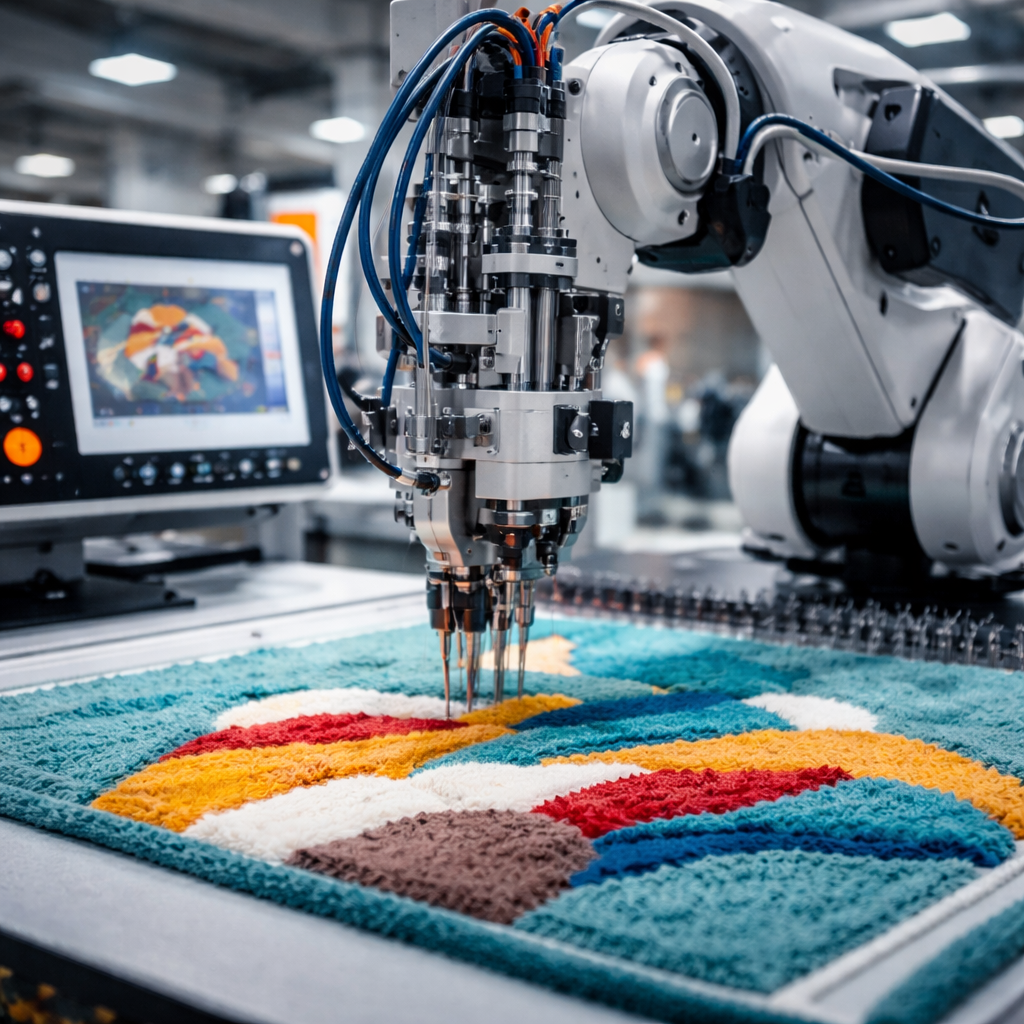
At its core, a robot program translates ideas into motion. Designers create patterns, engineers define processes, and the program converts these inputs into executable commands. These commands control movement, speed, positioning, and timing.
In a robotic tufting machine, this means converting a digital carpet design into thousands of controlled needle movements. Each stitch follows a path defined by the program. Without this translation layer, even the most advanced machine would not produce a usable result.
The program acts as a bridge. It connects human creativity to mechanical precision. It ensures the machine does not guess—it follows clear, structured instructions.
Consistency is one of the main reasons companies invest in automation. A robot program ensures that every cycle produces the same result. It eliminates variation caused by manual operation.
In tufting production, even small inconsistencies can affect the final carpet appearance. Uneven stitching or misaligned patterns reduce product quality. A well-designed robot program prevents these issues by maintaining strict control over every movement.
This repeatability also allows manufacturers to scale production. Once a program is tested and optimized, it can run continuously with minimal deviation.
Robot programs directly influence how well a machine performs. They control positioning accuracy, motion speed, and process timing. These factors work together to determine the final product quality.
Below is a simple comparison of how programming affects production:
Factor | Without Strong Programming | With Optimized Programming |
Accuracy | Inconsistent | Highly precise |
Speed | Limited | Optimized and stable |
Product Quality | Variable | Consistent and refined |
In a robotic tufting machine, this means smoother surfaces, cleaner edges, and better pattern definition. It allows manufacturers to achieve both efficiency and craftsmanship.
Modern robot programs do more than execute static instructions. They respond to real-time data from sensors and control systems.
In tufting systems, sensors detect issues like yarn breakage or tension changes. The program receives this data and triggers appropriate actions. It may pause the machine, adjust tension, or return to a maintenance point.
This ability to react improves efficiency and reduces downtime. It ensures that production continues smoothly, even when conditions change.
Advanced designs require advanced control. A robot program enables complex tufting patterns that would be difficult or impossible to achieve manually.
For instance, combining cut pile and loop pile in a single design requires precise control over needle behavior and yarn handling. The program coordinates these variations seamlessly.
This capability allows manufacturers to produce high-end, customized carpets. It transforms the robotic tufting machine into a flexible production tool rather than a fixed-function machine.
Pattern accuracy is critical in textile production. A robot program ensures that every design element is placed exactly where it should be.
The program defines stitch paths, spacing, and alignment. It follows digital design files and converts them into physical output. This ensures that the final carpet matches the original concept.
Even complex patterns with curves, gradients, or intricate details can be reproduced consistently.
Speed alone is not enough. High production rates must be balanced with quality. A robot program manages this balance by coordinating motion, tension, and timing.
In a robotic tufting machine, the program ensures that faster movement does not distort the fabric or disrupt stitch quality. It adjusts parameters dynamically to maintain a smooth finish.
This allows manufacturers to increase output while keeping product standards high.
Modern carpets often feature a mix of textures and styles. These include cut pile, loop pile, and variations in height and density.
A robot program enables this flexibility. It controls how the tufting head operates at each point in the design. It can switch between styles without stopping production.
This versatility helps manufacturers meet diverse customer demands.
Efficient programming reduces unnecessary movement and material usage. It ensures yarn is used effectively and minimizes production errors. This leads to better cost control and improved sustainability.
● It optimizes movement paths to reduce idle time
● It minimizes rework by preventing errors
● It improves overall production efficiency
Note: Better programming often leads to lower material waste and more predictable production costs.
Every robot program starts with a clear task definition. In tufting, this includes design specifications, material properties, and production requirements. The program must understand what to produce before it can determine how to produce it. This step sets the foundation for all subsequent actions.
Clear task definition ensures that the final output meets expectations.
Once the task is defined, the system plans the movement path. This involves determining start points, end points, and intermediate steps. The path must avoid errors and ensure smooth transitions. It also needs to account for machine capabilities and physical constraints. Effective path planning improves both speed and accuracy.
After planning is complete, the system moves into a critical stage. It converts design data and motion paths into instructions the machine can actually follow. At this point, abstract ideas become structured commands. These commands guide every action of the tufting process and ensure all components work together smoothly.
Instruction Type | Function in the System | Impact on Tufting Process |
Motor Control Commands | Direct movement of motors and drive systems | Ensures precise positioning and smooth motion |
Actuator Instructions | Control mechanical actions like needle movement | Defines how the tufting head performs each stitch |
Sensor Integration | Receive and process real-time feedback | Supports adjustments during operation |
Path Execution Data | Follow planned movement trajectories | Maintains accurate pattern reproduction |
Timing & Synchronization | Coordinate actions across all components | Keeps operations aligned and consistent |
Together, these instructions form a complete control system. They define how the machine moves, reacts, and performs each task. This stage ensures the robotic tufting machine operates with accuracy, stability, and efficiency.
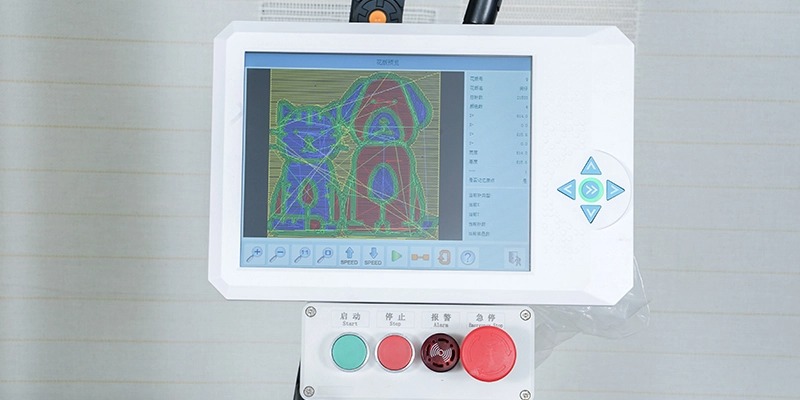
Robot programming integrates multiple system components into one cohesive operation. It links sensors, processors, and mechanical parts.
Sensors collect data from the environment. The program processes this data and sends commands to actuators. This cycle repeats continuously.
This integration allows the machine to operate intelligently rather than mechanically.
Automation is most effective when it can detect and respond to issues. Robot programs enable this capability.
For example, advanced tufting systems can detect yarn breakage and trigger alerts. They can pause production and guide the system back to a safe position. Solutions from MIXC often include such intelligent features, improving reliability and reducing manual intervention.
This reduces downtime and protects product quality.
Production requirements often change. A flexible program allows quick adjustments without major reconfiguration. Operators can modify parameters easily during production.
● Adjust stitch density or spacing
● Change pattern layouts quickly
● Adapt to different material types
Tip: Flexible programming systems allow faster response to custom orders and design changes.
Time-to-market is critical in competitive industries. Robot programming shortens the transition from design to production in a very practical way. Digital designs can be quickly converted into machine instructions, which reduces setup time and avoids repeated manual adjustments. This faster workflow helps companies respond to new orders more efficiently and stay ahead in fast-changing markets.
Consistency builds trust over time. Customers expect the same quality across every order, no matter the volume or design complexity. Robot programs ensure that each batch meets the same standards by controlling every detail of the process. This reliability reduces variation, improves product reputation, and supports long-term customer relationships.
Customization is becoming more important in today’s market. Customers want unique designs, textures, and high-quality finishes. Robot programming enables this flexibility without slowing production. It allows manufacturers to switch between designs easily and produce custom carpets with stable quality, making premium product lines more achievable.
Efficiency drives profitability and long-term growth. Advanced systems combine precise programming and high-performance hardware to maximize output. For example, robotic tufting machine solutions from MIXC integrate intelligent control systems and high-speed tufting capabilities. This combination improves productivity, reduces downtime, and maintains consistent product quality across large-scale operations.
Ease of use matters in daily production environments. A clear and intuitive interface reduces training time and helps operators work more confidently. It also lowers the risk of errors during setup or adjustment. Operators should be able to change settings quickly, monitor performance in real time, and respond to issues without delays. A well-designed interface improves workflow and keeps production running smoothly.
Compatibility ensures flexibility in production. The system should support common design formats and allow seamless integration.
Below is a quick overview:
Feature | Benefit |
Multi-format support | Easier design integration |
Real-time editing | Faster adjustments |
Visual preview | Better accuracy before production |
These features simplify operations and improve overall efficiency. They also allow teams to handle complex designs with greater confidence and control.
Automation is only as effective as its programming. A well-designed program ensures smooth, reliable operation across different production scenarios. It controls how the machine reacts to changes and maintains stability during long production runs. It determines whether the system delivers consistent results or struggles with variability, especially under high workload conditions.
Scalability is essential for business growth. Robot programs allow manufacturers to expand production without losing control over quality or efficiency. They make it possible to replicate the same process across multiple machines and production lines. This ensures uniform output, even when production volume increases significantly.
The true value of a robotic tufting machine lies in its programming. It transforms the machine into a flexible, high-performance production tool that can adapt to different designs and requirements. Without proper programming, the hardware cannot deliver its full potential or maintain consistent production standards.
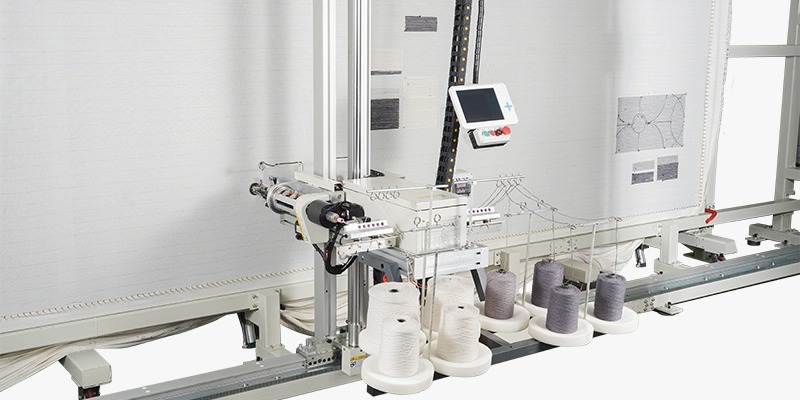
The purpose of a robot program is to guide machines to work with accuracy and consistency. It connects design ideas, control systems, and machine actions into one smooth process. In a robotic tufting machine, this role becomes even more important, because it directly affects pattern quality, stitching precision, and overall production results. A strong program ensures that creative designs are translated into reliable, high-quality carpet output.
Today, robot programming forms the core of modern automation. It supports faster production, flexible customization, and stable performance at scale. Companies like MIXC Textile Technology Co., Ltd. enhance this value by combining intelligent programming systems with advanced tufting technology. Their solutions help manufacturers improve efficiency, maintain high standards, and deliver consistent, premium textile products in competitive markets.
A: The purpose of a robot program is to turn design goals into precise machine actions. It controls movement, timing, and response, helping robots work accurately, efficiently, and consistently.
A: In a robotic tufting machine, programming controls stitch paths, pattern placement, and motion speed. It helps the machine produce clean designs, stable quality, and repeatable results.
A: A robotic tufting machine uses a robot program to convert digital designs into tufting instructions. It guides the head movement, manages yarn control, and supports accurate pattern execution.
A: A robotic tufting machine program improves precision, speed, flexibility, and consistency. It also helps reduce waste and supports custom carpet production.
A: In most production settings, yes. Programming offers more stable output, faster repeat work, and better control over complex designs than manual operation.
A: Yes. A good robotic tufting machine program can lower waste, reduce errors, and improve efficiency, which helps control production costs over time.


